
Post-Operative Swelling: When Can Lymphatic Drainage Massage Start?
25 September 2026
Travelling for Surgery: Planning Guide for Patients From Out of Town
25 September 2026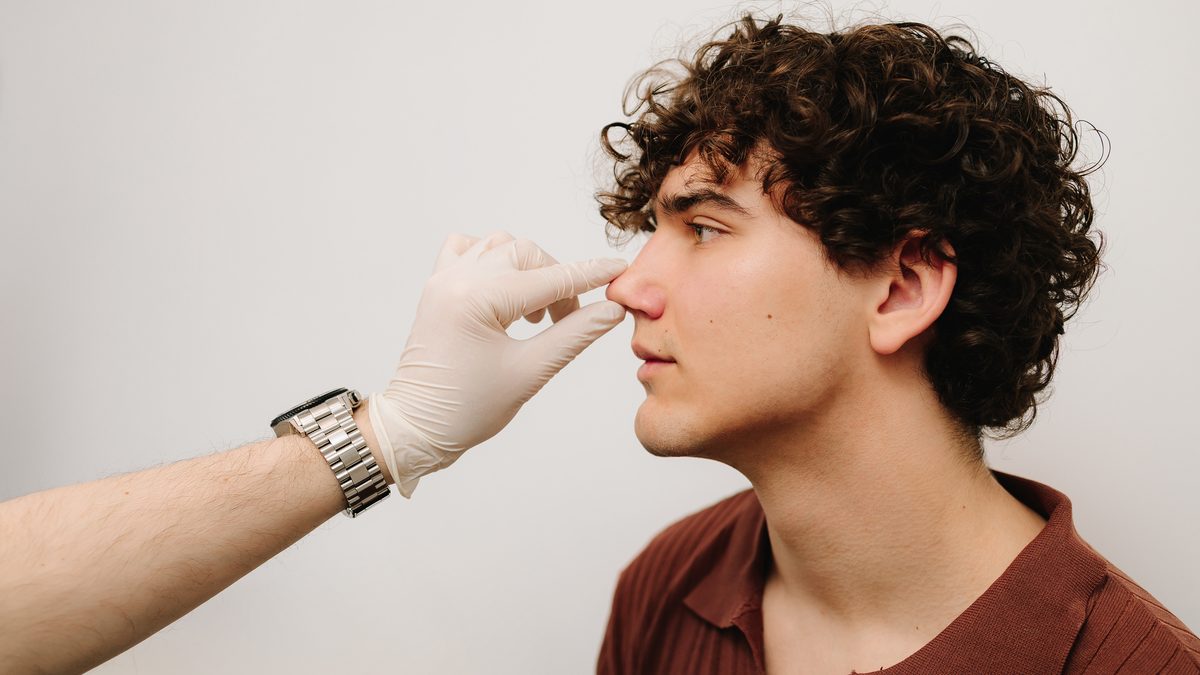
In short: In men, the aim of rhinoplasty is usually not simply a smaller nose, but a nose that suits the masculine character of the face: a straight or slightly strong dorsum, a tip that is not overly upturned and comfortable breathing. Men generally have thicker nasal skin, which affects how long healing takes and how much tip refinement will become visible; the plan is always individual and based on examination.
When people think of rhinoplasty (nose reshaping surgery), they often picture a narrow nose with a turned-up tip. On many male faces, however, that look would appear out of place. Male and female faces differ clearly in bone structure, skin thickness and proportions, and these differences shape the surgical plan directly.
This article looks at the anatomical features of the male nose, how healing progresses in thick-skinned noses, why masculine features should be preserved and how breathing problems are included in the operation. Every nose is different; what follows is a general framework, and the actual plan is determined by a physician’s examination.
Key differences between the male and female nose
The male nose generally has a wider and stronger bone and cartilage framework. In most men the nasal bridge (dorsum) follows a straight or slightly prominent line, whereas in women a gently curved, slightly concave profile is chosen more often. Because the brow ridge is usually more prominent in men, the nasofrontal angle between forehead and nose appears deeper, and the radix (the root of the nose) typically sits somewhat higher.
Tip rotation, meaning how far the tip turns upward, is kept more limited in men. For the nasolabial angle between the tip and the upper lip, sources describe values close to 90 degrees in men and somewhat wider angles in women. Tip projection, how far the tip stands out from the face, is also judged together with the rest of the face, especially the chin and forehead.
| Feature | In men, typically | In women, typically |
|---|---|---|
| Skin thickness | Thicker, rich in oil glands | Thinner, reflects the underlying framework more |
| Nasal dorsum | Straight or slightly strong line | Straight or gently curved line may be preferred |
| Tip rotation | Limited; a clearly upturned tip is avoided | A slightly more upturned tip is chosen more often |
| Nasofrontal area | More prominent brow, deeper angle | Softer transition |
| Tip definition | Moderate refinement; becomes visible more slowly with thick skin | Finer definition is usually noticeable earlier |
The table shows average tendencies; some women have a straight dorsum and some men have thin skin. The goal is always proportions that suit the individual face.
Thick skin: healing and patience
In men, the nasal skin, particularly over the tip, is often thicker and richer in sebaceous glands. Thick skin conceals the underlying cartilage framework to a greater extent. As a result, subtle changes made during surgery take longer to show, and swelling in the tip usually resolves later.
Although swelling along the bridge generally eases noticeably in the first weeks, the tip may take more than a year to reach its final shape in thick-skinned patients. With thick skin the surgeon aims to build solid cartilage support rather than making the tip very small, because without adequate support thick skin can make the tip look fuller and less defined. Where the physician considers it appropriate, additional measures to manage swelling and a regular skincare routine may be recommended during healing.
- With thick skin, results emerge more slowly; judging the outcome early can be misleading.
- Following the care routine your surgeon recommends after the splint and tape period is important.
- If you are prone to acne, it is helpful to have this assessed before surgery.
Preserving masculine character: the risks of over-reduction
A central principle of male rhinoplasty is to treat the nose as part of the whole face rather than as an isolated feature. A nose that has been over-reduced, with a scooped dorsum and a clearly upturned tip, can give a male face a feminine appearance. Over-reduction can also weaken the internal structure of the nose, setting the stage for breathing problems and the need for revision surgery later on.
For this reason, planning considers whether a dorsal hump should be removed fully or only partly, how much the tip should be rotated and how nasal width should be balanced, always in relation to the forehead, cheekbones, chin and jawline. Some men prefer to keep a slight line on the bridge; this is a legitimate and common choice.
Breathing: form and function together
Male patients seeking rhinoplasty frequently also report breathing difficulties. Common causes include septal deviation (a bend in the wall that divides the nose), turbinate hypertrophy (enlargement of tissues inside the nose) and fractures or deviations from a previous injury.
Correcting appearance and function in the same operation is called septorhinoplasty. At the examination the inside of the nose is assessed in detail, and imaging may be requested if needed. While the external shape is refined, it is important not to weaken the supporting structures that keep the airway open, such as the nostril walls and the internal valve area, especially in post-traumatic deviations, which are common in men.
Planning, choice of technique and practical points during recovery
An open discussion of expectations before surgery is decisive. Photo analysis and digital simulation can make communication easier, but a simulation is not a promise of a result; it simply helps put the shared goal into a common language.
The technique is chosen according to the structure of the nose. Piezo surgery is a method that uses ultrasonic vibration to shape bone in a controlled way, and it may be preferred in some cases where the bony framework is strong. Which technique is appropriate is decided based on examination findings.
- Glasses: While the nasal bones heal, resting heavy glasses on the bridge is not recommended for the period your surgeon specifies.
- Sport: Your surgeon decides when strenuous exercise, and especially contact sports, can be resumed; sports with a risk of impact are usually postponed for longer.
- Shaving and grooming: Take care around the splint and tape area.
- Smoking: It impairs tissue healing; discuss the periods before and after surgery with your doctor.
Frequently Asked Questions
Is rhinoplasty more difficult in men than in women?
Rather than more difficult, it is more accurate to say it has different priorities. Men may have thicker skin and a stronger bony framework, and masculine features need to be preserved. Planning therefore focuses on harmony between the nose and the rest of the face and on supporting the tip where the skin is thick. Every nose has its own challenges, and these are assessed during the examination.
When does a thick-skinned nose settle after rhinoplasty?
Swelling along the bridge usually decreases in the first weeks, but in thick-skinned noses the tip often takes around a year, and sometimes longer, to reach its final shape. Slow resolution of swelling during this time is normal. Because judging the result early can be misleading, keeping up with regular follow-up visits is recommended.
Will my nose look feminine after surgery?
Preventing this is one of the core aims of male rhinoplasty planning. Avoiding an overly upturned tip, leaving the dorsum straight or slightly strong and not over-reducing the nose all help preserve masculine character. Sharing your expectations, and the features you want to keep, clearly during the pre-operative consultation is therefore important.
Can breathing problems be corrected in the same operation?
In many cases, yes. A deviated septum, enlarged turbinates or structural problems after an injury can be addressed in the same operation as the aesthetic correction; this is called septorhinoplasty. The inside of the nose is examined to identify the source of the problem. Further assessment may sometimes be needed, and the appropriate approach is decided based on examination findings.
When can I return to work and sport after rhinoplasty?
This depends on the extent of the procedure, the physical demands of your job and how your healing progresses. A return to desk work is generally planned earlier than strenuous exercise. For contact sports and activities with a risk of impact, surgeons usually recommend a longer wait. Exact timing is set by your surgeon at your follow-up visits.
For more on the technique and the process, see Piezo-Assisted Rhinoplasty and Revision Rhinoplasty; to arrange an examination in Kayseri, please use the Contact page.
This article is for informational purposes only; a physician’s examination is required for diagnosis and treatment.