
Nutrition After Surgery: General Principles That Support Healing
25 September 2026
Is a Facelift Permanent? Realistic Facts About How Ageing Continues
25 September 2026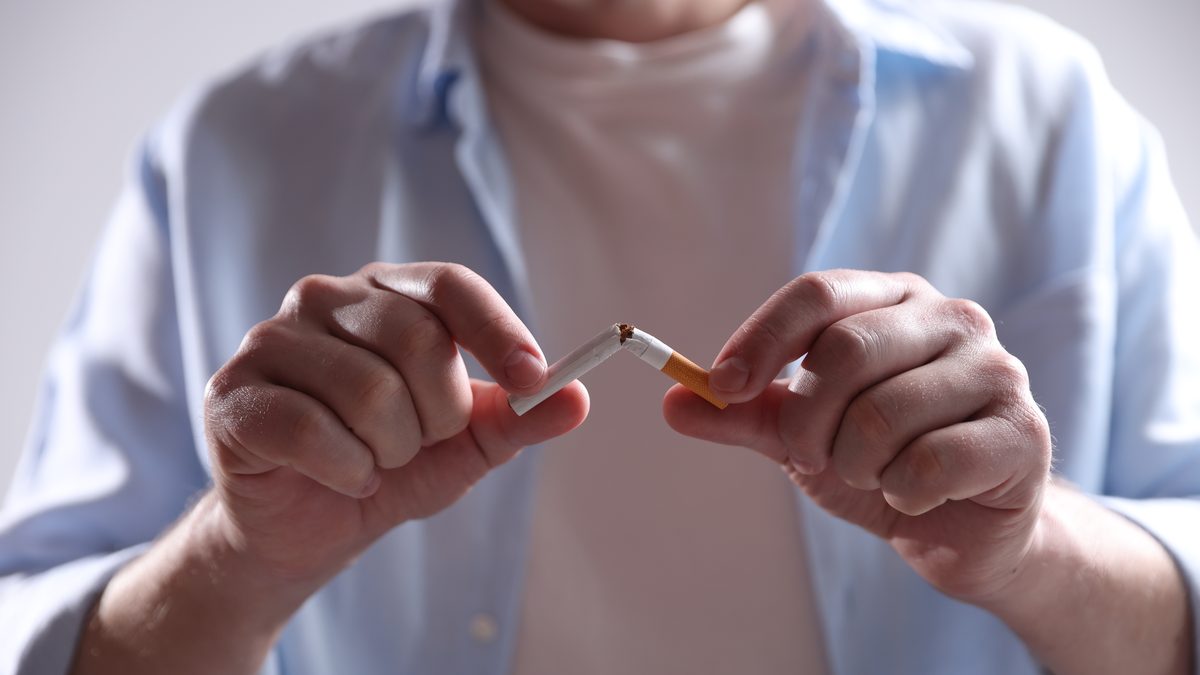
In short: Smoking reduces the oxygen that reaches tissues, because nicotine narrows blood vessels and carbon monoxide lowers the blood’s capacity to carry oxygen. This can slow wound healing and increase the risk of infection, wound breakdown and skin loss, particularly in operations such as facelifts and tummy tucks where large areas of skin are lifted. Surgeons therefore ask patients to stop smoking and other nicotine products before and after surgery for a period they determine.
When a surgeon asks detailed questions about smoking at a consultation, the aim is not to judge a habit but to assess information that directly affects the safety of the operation. There is no rule that smokers can never have surgery; however, planning, the choice of technique and the recovery period may all be shaped by this information.
This article explains how smoking affects wound healing, why it matters more in some operations, its effects on anaesthesia and the lungs, the position of e-cigarettes and other nicotine products, and what can help when stopping. The periods and recommendations that apply to you are set by your physician.
How does smoking reduce oxygen in the tissues?
Wound healing relies on the formation of new blood vessels, the production of collagen (the main building block of connective tissue) and immune cells fighting bacteria. All of these processes need good blood flow and oxygen. Smoking disturbs this balance in several ways:
- Nicotine: causes small blood vessels to narrow (vasoconstriction), which can reduce blood flow particularly to the edges of skin flaps and incision lines.
- Carbon monoxide: binds to haemoglobin in the blood far more strongly than oxygen does, so the blood carries less oxygen and releases it less easily to the tissues.
- Other chemicals: many substances in tobacco smoke can affect the lining of blood vessels, increase the tendency of blood to clot and weaken the immune response.
The result is that the tissue which most needs oxygen to heal, namely skin that has just been cut and repositioned, has to work with less of it.
In which operations is the risk more pronounced?
Some aesthetic operations require the skin to be lifted from the underlying tissue over a wide area. In these procedures, the lifted skin depends on a more limited blood supply coming from its edges, and the vessel-narrowing effect of nicotine can reduce that supply further.
- Face and neck lift: because skin is lifted around the ears and in the neck, smokers may have a higher risk of wound healing problems and skin necrosis (loss of blood supply to part of the skin so that it no longer survives) at the edges.
- Abdominoplasty (tummy tuck) and body lifts: the central part of the incision and the lower abdominal skin are among the areas with the weakest blood supply; wound separation and delayed healing may be more common in smokers.
- Breast reduction and lift: the blood supply of the nipple and areola (the darker skin around the nipple) can be affected, and healing may be delayed where incisions meet.
Smoking can also increase the risk of wound infection and have a negative effect on scarring. A wound that takes longer to heal often leaves a more visible scar.
Smoking, anaesthesia and the lungs
Smoking affects not only the skin but also the respiratory system. Smokers tend to produce more mucus in their airways, and the airways can be more sensitive. Breathing problems such as coughing, airway spasm and chest infection may occur more often during and after general anaesthesia. Carbon monoxide also reduces the oxygen reaching tissues during the operation.
For this reason, the anaesthesia team asks about smoking, how much and for how long, during the pre-operative assessment. If there are related conditions such as chronic bronchitis or COPD (chronic obstructive pulmonary disease), further assessment may be needed. Giving open and complete information at this stage is for your own safety.
E-cigarettes, heated tobacco and other nicotine products
Although e-cigarettes and heated tobacco products produce less smoke than conventional cigarettes, most of them contain nicotine, and nicotine’s vessel-narrowing effect remains whatever the product. Surgeons therefore usually extend their advice beyond cigarettes to all nicotine-containing products. Sources differ in their assessment of the long-term effects of e-cigarettes.
| Product | Key content | General view in relation to surgery |
|---|---|---|
| Cigarettes, cigars, pipes | Nicotine, carbon monoxide and many other chemicals | Both vessel narrowing and reduced oxygen transport; stopping is advised |
| Waterpipe (shisha) | Nicotine and high carbon monoxide from the charcoal | Assessed similarly to cigarettes; stopping is advised |
| E-cigarettes and heated tobacco | Mostly nicotine, other substances at varying levels | Usually asked to stop because of the nicotine effect |
| Nicotine gum, patches and similar | Nicotine | Whether they can be used is decided individually with the surgeon |
Passive smoking is also worth considering. Being regularly exposed to smoke indoors is undesirable, and a smoke-free environment is helpful during recovery.
When to stop, and how to get support
How long before surgery you should stop and how long you should stay off tobacco afterwards is decided by the surgeon, based on the type and extent of the operation and your health. In general, the earlier you stop, the better for tissue oxygenation. The effect of carbon monoxide begins to fall soon after stopping, whereas effects on blood vessels and the lungs take longer to improve.
Staying off nicotine after surgery matters too, because wound healing continues for weeks after the operation. Stopping before surgery and starting again straight afterwards can affect tissue that is still healing. Where they consider it necessary, some surgeons may check nicotine use with blood or urine tests.
- Health services: family doctors and stop-smoking clinics can plan behavioural support and, where appropriate, medication.
- Quitlines: many countries offer free telephone support for stopping smoking.
- Medicines and nicotine products: stop-smoking medicines and nicotine replacement products should only be used under medical guidance and in line with your surgical plan.
- Open communication: if you are finding it hard to stop, telling your surgeon allows the timing of the operation to be reconsidered.
Frequently Asked Questions
How long before cosmetic surgery should I stop smoking?
There is no single period that applies to everyone; your surgeon sets it according to the type and extent of the operation and your health. It is particularly important in operations where large areas of skin are lifted, such as facelifts or tummy tucks. The general view is that the earlier you stop, the better for tissue oxygenation. Make this decision together with your surgeon at the consultation.
When can I smoke again after surgery?
Because wound healing continues for weeks after the operation, surgeons usually ask patients to stay away from nicotine for a certain time afterwards as well. This period depends on the operation and on how healing progresses. Surgery can also be an opportunity to stop smoking altogether; your family doctor or a stop-smoking clinic can help you with this.
Are e-cigarettes safer than regular cigarettes before surgery?
E-cigarettes may contain less smoke and carbon monoxide, but most contain nicotine. Whatever the product, nicotine can narrow small blood vessels and reduce blood flow to the tissues. For this reason, patients are usually asked to stop e-cigarettes and heated tobacco products around surgery as well. Sources differ in their assessment of the long-term effects.
Can I use nicotine patches or gum?
Nicotine patches and gum are smoke-free, but they contain nicotine and may have a vessel-narrowing effect. Whether they can be used around surgery is therefore decided with your surgeon according to the type of operation. Non-nicotine stop-smoking medicines are another option, and their suitability is also assessed by a physician. It is best not to start them on your own.
What happens if I don’t tell my surgeon that I smoke?
Smoking directly affects surgical planning, anaesthetic management and follow-up during recovery. Incomplete information can mean that avoidable risks are overlooked. Stating clearly how much you smoke, and whether you use other products such as e-cigarettes, helps your surgeon and the anaesthesia team make a plan that suits you.
For information on facelift surgery, you can visit the Face and Neck Lift page, and for the anaesthesia process the Anaesthesia Information page; to arrange a consultation in Kayseri, please use the Contact page.
This article is for informational purposes only; a physician’s examination is required for diagnosis and treatment.