Coping with Fear of Surgery: The Role of Patient-Doctor Communication
25 September 2026
Season and Surgery Timing: What to Consider in the Summer Months
25 September 2026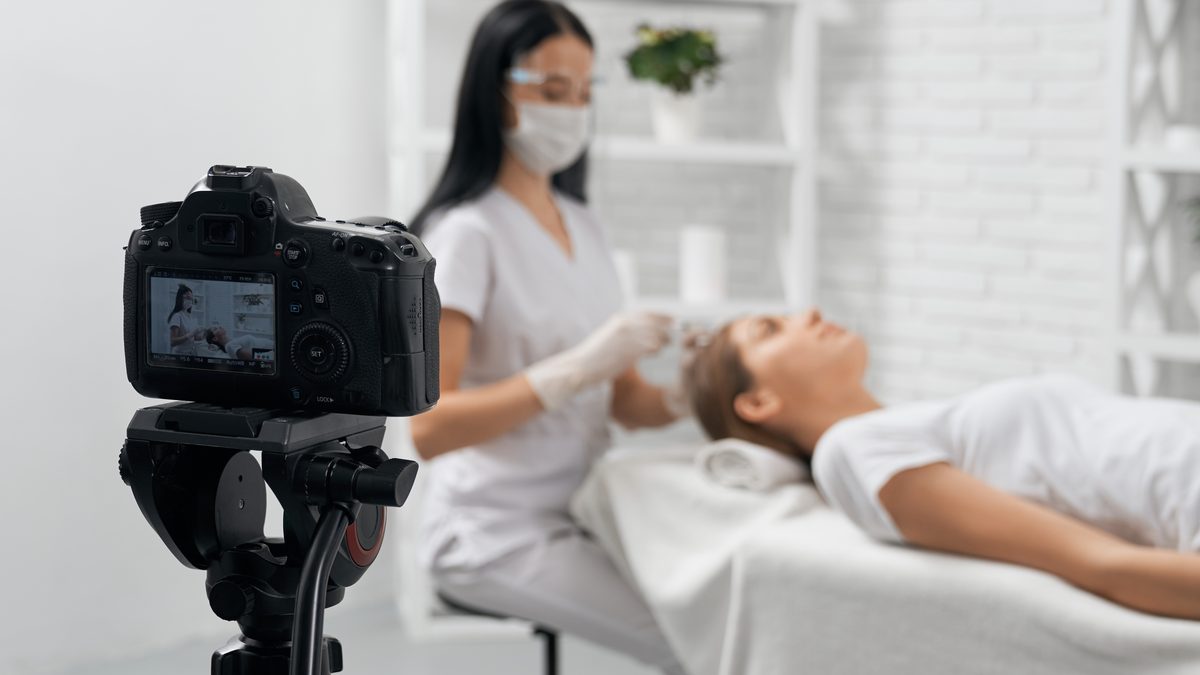
In short: The photographs taken during an aesthetic surgery consultation are medical records. They document the face or body in standardised angles and lighting, capture asymmetries, support discussion of the surgical plan with the patient and allow healing to be compared over time. They belong to the patient file, are protected as personal data and are not shared or published without explicit consent.
Hearing that photos will be taken at a consultation can feel strange or even uncomfortable. Yet medical photography reveals details that are hard to notice in a mirror or on a phone camera, and it gives the patient and surgeon a shared visual reference for the plan they are discussing. Months after surgery, the answer to the question “what did it look like before?” is often found only in these records.
This article explains why photographs are taken, how standardised photography works, its role in planning and communication, how it helps to follow healing, and what your rights are regarding consent and privacy. Which images are needed depends on the procedure and on the individual; the details are clarified during the physician’s examination.
Why are photographs taken at a consultation?
A medical photograph is not a snapshot; it is a clinical document taken in a way that allows measurement and comparison. Its main purposes are:
- Recording the current state: facial proportions, nasal shape, skin quality, breast or abdominal contour and similar features are documented before surgery.
- Identifying asymmetries: differences between the two sides become clearer when standardised images are placed side by side.
- Planning: the surgeon uses the images to assess where and what kind of change might be meaningful.
- Communication: patient and surgeon look at the same image while discussing expectations and limits.
- Follow-up: photos taken at check-ups are compared with the initial records under the same conditions.
How is standardised medical photography done?
To be comparable, photos need to be taken under similar conditions every time. This usually means a plain background, even lighting that does not cast shadows, and a fixed camera distance and height. Make-up, jewellery, glasses and hair covering the face can alter the image, so you may be asked to remove them before the session.
Head position matters too. For facial photographs, the head is usually aligned so that the Frankfurt plane (an imaginary horizontal line from the ear canal opening to the lower rim of the eye socket) is parallel to the floor. Tilting the head slightly forward or backward can make the nose or jawline look different from reality.
| Area | Commonly used standard views | Points of attention |
|---|---|---|
| Nose | Front, both sides, both three-quarter views, from below (nasal base) | Head position, symmetry of tip and nostrils, change when smiling |
| Face and neck | Front, profiles, three-quarter views; facial expressions when needed | Shadow-free lighting, chin–neck angle, skin quality |
| Eyelids and brows | Close-ups with eyes open, closed and looking up | Brow height, position of the lid margins, side-to-side difference |
| Trunk and body | Standing: front, back, sides and three-quarter views | Posture, arm position, identical distance for each session |
The views required vary with the procedure. A view of the nasal base is often used when assessing rhinoplasty, whereas the side profile and neck angle may be more important when planning a face and neck lift.
Documenting asymmetry and its role in planning
The human face and body are naturally not perfectly symmetrical. One eyebrow sitting slightly higher, a nasal bridge deviating a little to one side, or a difference in breast size or waistline are common and usually go unnoticed in daily life. Standardised photographs make these differences visible before surgery.
This has two important consequences. First, the plan can address in advance which asymmetry may be improved and to what extent, and which one is likely to persist to some degree. Second, if an asymmetry is noticed after surgery, the records help answer whether it is new or was present beforehand. Both help keep expectations realistic for patient and surgeon alike.
During planning, drawings may be made on the photographs or a computer simulation (a digital edit showing the intended change on the image) may be used. Simulations are explanatory tools that illustrate the direction and degree of a proposed change; they are not an exact image of the outcome and do not represent a promise of a result. Factors such as soft-tissue thickness, healing characteristics and bone and cartilage structure make outcomes differ from person to person.
Comparing healing over time and the medical record
Healing is a gradual process that changes over months, largely because of swelling. Looking in the mirror every day, you may not notice these changes and may even feel nothing is improving. Photos taken at follow-up visits with the same angles and lighting help assess reducing swelling, maturing scars and contour changes more objectively.
Photographs are also part of the medical record. They are stored in the patient file together with consultation notes, consent forms and test results. Should a revision (corrective operation) be needed later, or should you wish to seek another physician’s opinion, these records are a valuable source of information. You can also request a copy for your own personal file.
Consent, privacy and protection of personal data
Because medical photographs are health data, they are personal data requiring special protection. Regulations such as Türkiye’s Personal Data Protection Law (KVKK) and the GDPR in Europe require that the purpose of processing is explained, that the data are stored securely and that access is restricted.
- Before photos are taken, their purpose should be explained and your consent obtained.
- Consent for medical records does not mean permission for other uses such as teaching, publication or social media; that requires separate, explicit consent.
- Your photos are not shared or published without your explicit consent, and you have the right to withdraw consent you have given.
- Secure record systems rather than personal devices, and a private setting for the session, are to be expected.
If you feel uncomfortable during the session, it is entirely reasonable to say so, to ask for a chaperone to be present, or to ask which images are actually necessary.
Frequently Asked Questions
Do I have to be photographed at an aesthetic surgery consultation?
Photographs are an important record for sound planning and follow-up, so they are requested in most aesthetic surgery assessments. Even so, the purpose should be explained and your consent obtained beforehand. If you have concerns, you can ask which images are needed and why, and request that they are taken in a private setting. The decision is made together with you after this explanation.
Will my consultation photos be shared with anyone?
Photos taken for medical records are part of your patient file and are protected as personal health data. Using them for other purposes, such as teaching, scientific publication or social media, requires your separate explicit consent. Without that consent, your photos are not shared or published, and any consent you give can be withdrawn later.
Are phone selfies enough for surgical planning?
Phone photos sent for a preliminary assessment can give a general idea but are usually not sufficient for planning. Front cameras at close range can make the face, and especially the nose, look larger than it is, and differences in light and angle can hide or exaggerate asymmetries. Definitive planning therefore combines standardised photographs taken at the consultation with a physical examination.
Will I end up looking like the computer simulation?
A simulation is an explanatory tool that visualises the direction and extent of a discussed change; it is not an exact picture of the result. Soft-tissue thickness, skin quality, healing characteristics and skeletal structure all influence the outcome. A simulation is useful for talking about expectations, while a realistic goal is set individually, together with the examination findings.
How should I prepare for the photo session?
If your face is being assessed, arriving without make-up, removing jewellery and glasses, and tying back your hair makes the session easier. For body areas, simple underwear or a disposable garment provided by the clinic is usually preferred. Keeping your head and posture steady as directed helps produce images that can be compared reliably over time.
You can read more about planning on the Piezo-Assisted Rhinoplasty and Revision Rhinoplasty and Face and Neck Lift pages, and use the Contact page to arrange a consultation in Kayseri.
This article is for informational purposes only; a physician’s examination is required for diagnosis and treatment.